How to Keep Track of Your Vinyl Records (and Stop Buying Duplicates)
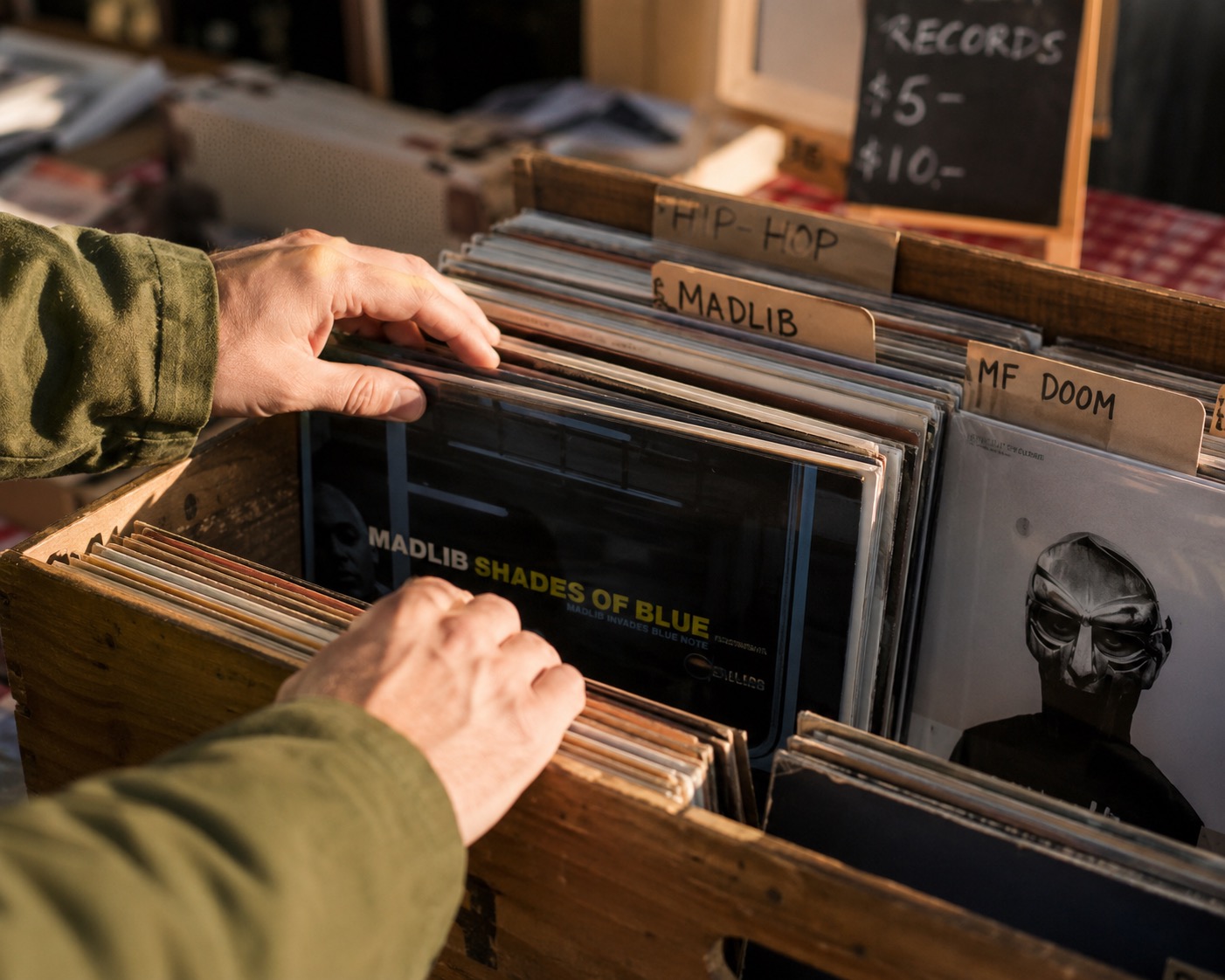
There's a particular feeling every record collector knows. You're at a record fair, flipping through a crate, and there it is: the album you've been meaning to pick up for ages. The price is right, the sleeve looks clean, and ten minutes later it's yours. Then you get home, slide it onto the shelf, and freeze. It's already there. Same album, bought by you, months ago.
I've done this more than once. And judging by the Discogs forums, where one collector confessed to buying the same album three times, I'm in good company. So this is the guide I wish I'd read years ago: how to keep track of which records you own, so that every record you bring home is actually new to your collection.
Why your memory gives up around 100 records
When your collection fits in a single crate, you know every spine by heart. But collections grow quietly. A few records a month, a birthday gift here, a charity shop find there, and suddenly you're at 200 or 300 albums spread across shelves, boxes, and that one stack next to the turntable.
Storage makes it worse. Records that live in boxes under the bed, in the attic, or at the back of a cupboard effectively vanish from memory. Out of sight really is out of mind.
The tricky part is that your brain doesn't store your collection as a list. It stores feelings. 'I love this album' and 'I own this album' feel almost identical from the inside, especially for records you've been meaning to buy for years. And the moment you most need accurate recall, standing in a busy shop with a bargain in your hands, is exactly when your memory is at its least reliable.
Step one: get your collection out of your head
The fix starts with a one-time job: catalog everything you own. I know, it sounds like homework. But it's the foundation for everything else, and it's a surprisingly pleasant way to spend a few evenings.
Don't try to do it in one sitting. Work in batches of 50 to 100 records, put something good on the turntable, and log the essentials: artist, title, year, and pressing details if you care about those. You're not building a museum archive. You're building a list you can search from your phone in under ten seconds.
If your records have barcodes, a scanner app speeds this up considerably. Older pressings without barcodes take a quick manual search instead, and most catalog tools will autofill the artist, year, and cover art once you've found the right release.
Make it a ritual: one crate per session, coffee within reach, and the record you just cataloged spinning while you work.
Pick a system you'll actually keep up with
A catalog only works if it stays current, so the best system is whichever one you'll still be using six months from now. The three most common options:
- A spreadsheet. Free and flexible, and perfectly fine for 50 records. At 300 it becomes a chore, and it's clumsy to search on your phone while standing in a shop.
- Discogs. A phenomenal database with nearly every pressing ever made. It's built for solo collectors and sellers, though, and it can feel like heavy machinery when all you want to know is whether you own something.
- A dedicated collection app. Built for exactly this job: quick search on your phone, cover art, and in some cases an automatic warning when you try to add something you already own.
Whatever you choose, two rules make or break it. First, new records get added the day they come home. In our house the rule is simple: the record doesn't touch the turntable until it's in the catalog. Second, it has to be searchable in seconds, because that's all the time you'll give it in a shop.
The part nobody warns you about: other people's records
Here's where it gets interesting. If you live with a partner or family who also buy vinyl, your own memory is only half the problem. The shelf is shared, but the mental lists aren't. You can be completely certain you never bought that copy of Neil Young's Harvest, and you'd be right. Your partner bought it two years before you met.
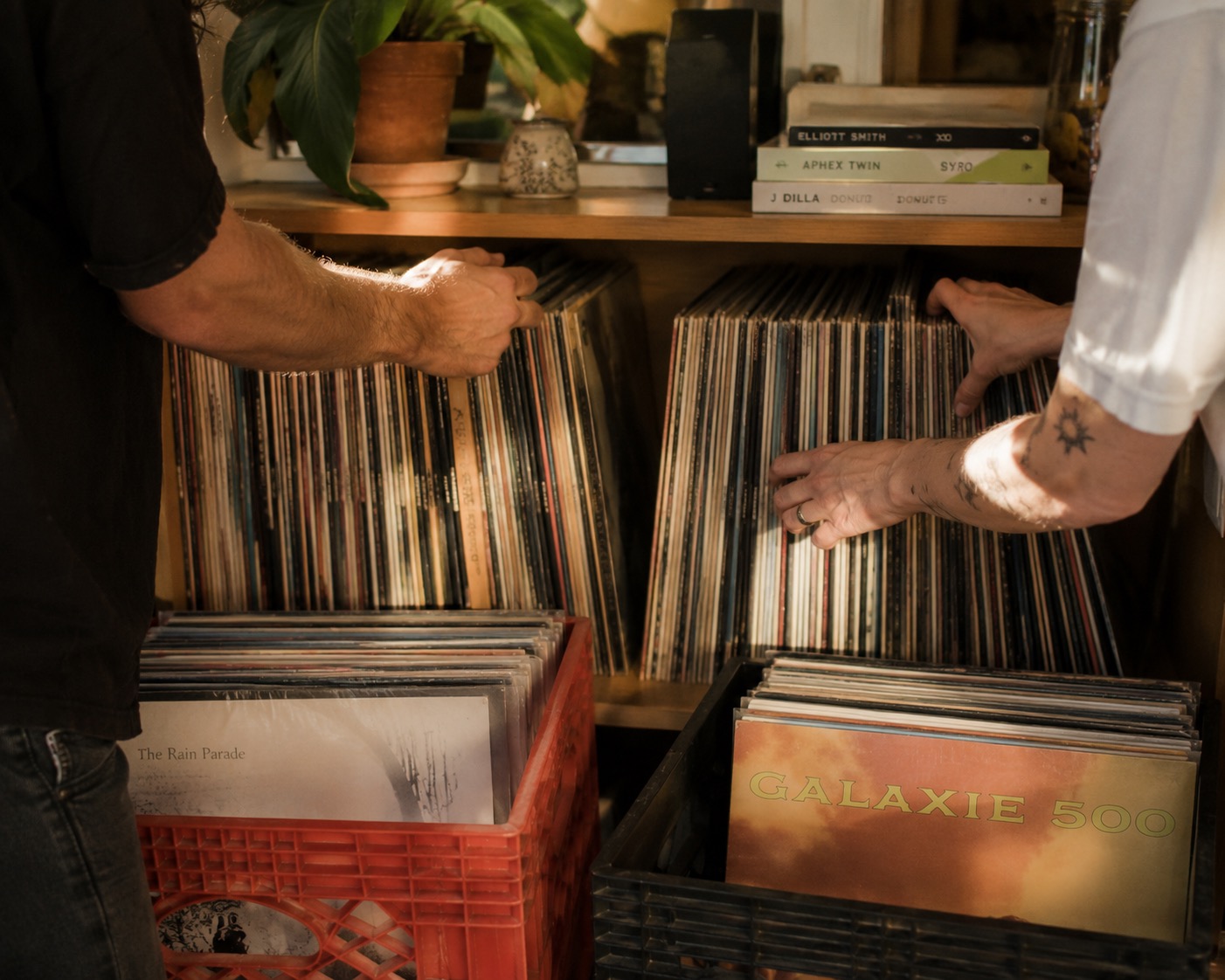
Nine and I only discovered how many albums we both owned when we merged our collections onto one set of shelves. The duplicates went straight into a box for friends. Lesson learned: in a shared home, the catalog should belong to the household, not to one person. One list, covering everything on the shelf, that anyone in the house can check from anywhere.
A ten-second habit for record fairs
Once the catalog exists, the habit that keeps duplicates out of your house is almost embarrassingly simple:
- Find a record you want.
- Search your catalog on your phone before you reach for your wallet.
- Already there? Put it back. Unless you're knowingly upgrading to a better pressing, which is always allowed.
- Not there? Buy it with total confidence.
And keep a wishlist alongside the collection. Knowing what you do want is just as powerful as knowing what you already have. It turns aimless crate digging into a treasure hunt, and when family ask what you'd like for your birthday, you'll have a real answer instead of a shrug.
There's a gift angle here too. A wishlist you can share means your family aren't guessing either. The classic birthday scene where two relatives proudly hand over the same record happens more often than you'd think, and it's entirely preventable.
Want to build that wishlist out properly? Here's how to make one your family will actually use.
One last thing
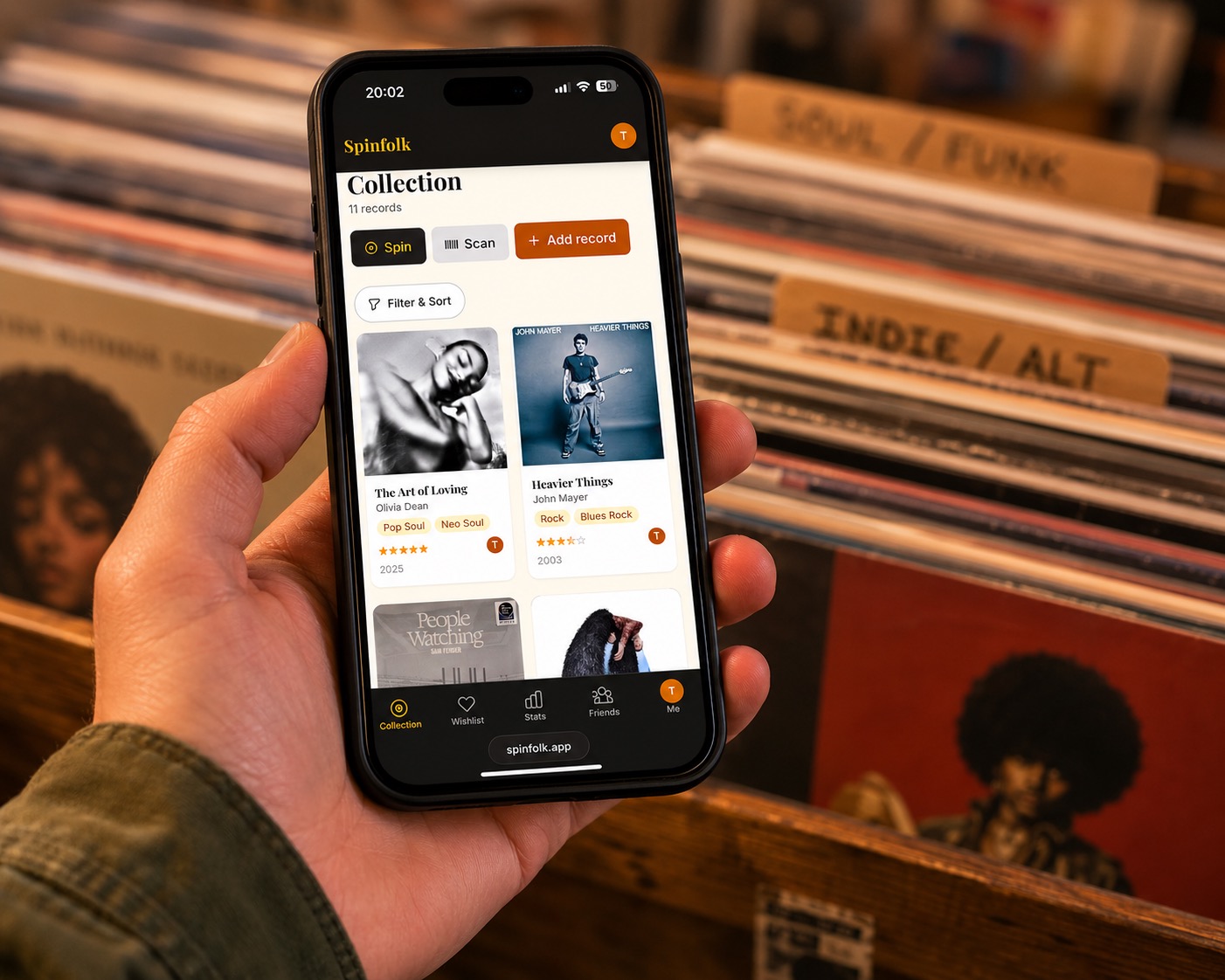
This exact problem is why I built Spinfolk. It's a shared collection catalog for households: everyone in your home works from the same list, you get a warning the moment you try to add a record that's already on the shelf, and each of you keeps a personal wishlist with a shareable link, so even the most enthusiastic gift-giving relatives stop buying you doubles.
If your shelves are starting to outgrow your memory, give it a look.
Try Spinfolk free at spinfolk.app. No credit card required.
Written by Tim, founder of Spinfolk.